
[Dutch below]
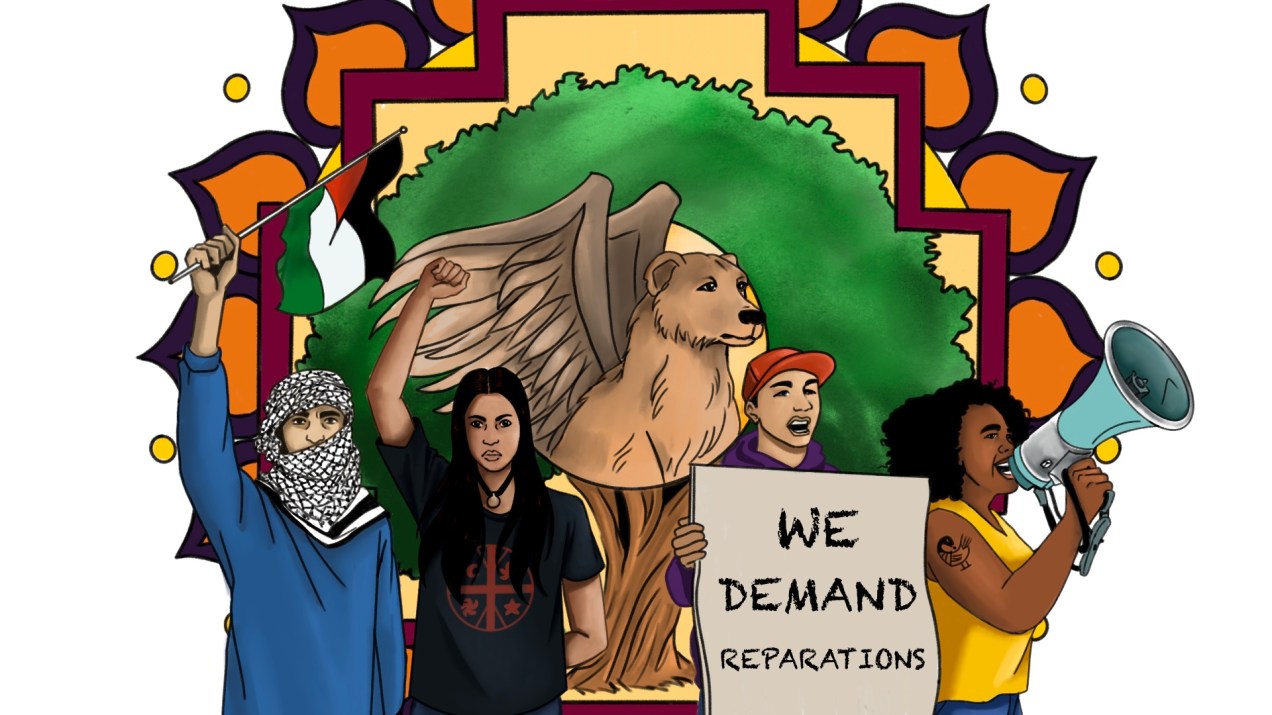
On April 19, 2025, Aralez is organizing the Pan-decolonial Reparations Conference 2025, a space for activists, scholars, and community organizers to engage in critical discussions on reparations, anti-imperialism, and global solidarity. This conference is held in the spirit of the 1955 Bandung Conference, where formerly colonized nations came together to shape a new world order beyond Western domination.
📅 Date: April 19, 2025
📍 Location: Ru Paré, Amsterdam
⏰ Time: 11.00-17.30, with optional dinner 18.00-20.00
👉Registration: klik here
Join Us: The Reparations Conference 2025 is not just a space for discussion—it is a space for strategic action. By addressing difficult debates and contradictions within the movement, we work towards a stronger and more unified decolonial front.
This conference is made possible by Milieudefensie Initiatievenloket.
=================== Program info ================
🔹Plenary Session: Key Tensions in the Decolonial Movement
💬 How do we, as a decolonial movement in the Global North, position ourselves in relation to Ukraine, the Axis of Resistance, and Latin America? The morning plenary session will address some of the most complex and urgent questions within the decolonial movement. While many activists identify as anti-imperialist, perspectives vary on how to translate this into concrete political positions.
This session will explore:
Latin America and anti-imperialist struggles: What can we learn from political processes in Latin America, and how do we connect them to the fight for decolonization and reparations?
Ukraine and the anti-war movement: What does a decolonial, anti-imperialist stance mean in the context of the war in Ukraine?
The Axis of Resistance: How do we engage with resistance movements that position themselves against Western hegemony?
🔹Workshops & strategy Sessions
Navigating Power – Decolonial Activism and the Establishment with Anima Jhagroe Ruissen
Working-Class Struggle and Decolonization: Reflecting with Our Minds and Bodies with Marten and Luisa
Building Alternative Media – Challenging the Mainstream Narrative with Left Laser
Taking Action in Politics from a Decolonial Activist Perspective with Jazie Veldhuyzen and Sabine Scharwachter
🔹Background: The spirit of Bandung
This conference is held in the spirit of the 1955 Bandung Conference, where leaders from 29 newly independent nations in Asia and Africa gathered to discuss self-determination, economic cooperation, and resistance against Western imperialism. The Bandung Conference marked a pivotal moment in anti-colonial and anti-imperialist struggles, inspiring movements for liberation and sovereignty across the Global South.
Today, in a world still shaped by colonial histories and imperialist interventions, the need for decolonial strategies and reparations remains urgent. The Reparations Conference 2025 builds on this legacy, bringing together activists, scholars, and organizers to continue the fight for global justice and liberation.
🔹Sign the Decolonial Manifesto
We also invite you to sign the Decolonial Manifesto, a living document that outlines concrete demands for reparations, self-determination, and the dismantling of neocolonial structures. The manifesto can be signed online now and will also be highlighted during the conference. By signing, you join a growing movement that pushes for structural change in the Netherlands and beyond.
👉 Sign the Decolonial Manifesto now: sign here
🔹Background speakers plenairy
Chris Kaspar de Ploeg (1994) is a grassroots organizer, journalist and author of Ukraine in the Crossfire (2017) and The Great Colonial War (2025). He is also co-founder and core organizer at Aralez, a grassroots organization for decolonization, and at Arts of Resistance, a coalition bridging social movements and the arts. Chris is also a policy officer for the anti-colonial socialist party De Vonk.Chris writes, speaks and organizes on various social justice topics, including (neo-)colonialism, climate justice, racism and capitalism. You can find his work on his website: www.chrisdeploeg.com.
Sandew Hira is a historian, author, and decolonial thinker from Suriname, known for his extensive work on rewriting colonial history from a decolonial perspective. As the secretary of the Decolonial International Network (DIN), he has been at the forefront of global discussions on the lasting impact of colonialism and the need for historical reparations. Hira has published numerous books and articles on topics such as slavery, colonialism, and the economic consequences of empire. His latest book “Decolonizing the mind: a guide to decolonial theory and practice” challenges Eurocentric knowledge production and calls for a radical transformation of historical narratives. He is a vocal advocate for reparations and structural justice, emphasizing the importance of dismantling colonial legacies in politics, economics, and culture. Through his work, Hira continues to push the boundaries of historical discourse, offering critical insights into the intersections of colonial history, contemporary inequalities, and the fight for global justice.
Marjolein van Pagee (1987) is a historian and writer from the Netherlands. She obtained a master in Colonial and Global History at Leiden University and is specialized in the history of the Dutch occupation of Indonesia. She is the author of Banda. De genocide van Jan Pieterszoon Coen (2021) and Bung Tomo. De revolutie van 1945 (2023). She is the founder of the Histori Bersama Foundation (www.historibersama.com) and of Media Mondo (www.media-mondo.com), an anti-imperialist news website on geopolitics and history. In September 2024 she visited Caracas, Venezuela, to attend the launching of a new international movement against (neo) fascism, initiated by The Bolivarian Republic of Venezuela. With Media Mondo she asks attention for the perspective of the ‘chavistas’, the followers of the political line of Hugo Chávez and his successor Nicolás Maduro.
🔹Background info break-out sessions and it’s facilitators
Break out N1: Navigating Power – Decolonial Activism and the Establishment
How do decolonial activists navigate established power structures while staying true to their principles? In this interactive workshop, we will explore strategies to challenge dominant systems, create structural change, and reclaim space without being co-opted. Through the experiences of Henna, discussion and reflection, we will examine the tensions between activism and institutional frameworks and share tactics for sustaining resistance while building collective power and work towards epistemic justice. Whether you are new to activism or have years of experience, this session offers insights and tools to strengthen your impact.
Anima Jhagroe-Ruissen is a Social Artivist who merges art (Henna and dance) and activism to challenge dominant narratives and create spaces for collective resistance and reimagination. As a performer and educator, she explores decolonial and intersectional approaches to embodiment, materiality, and community building. Her work is deeply rooted in the lived experiences of women of color and body-henna-earth relations. She works with movement and visual storytelling to confront histories of exotification and reclaims non-western artistic practices. Through (sensorial) workshops, performances, and training, Anima fosters conversation and transformation within the cultural sector and beyond.
Break out N2: Working Class struggle and Decolonization: reflecting with our minds and bodies
Part one of this workshop will explore the intersection of the working class struggle and decolonization. The historical role of trade unions in liberation struggles will be explored and we will make a connection with contemporary contributions and limitations of trade unions in present day strategies for liberation and decolonization. Additionally the participants will examine their own class position from a decolonial lens and define possible tactics for contemporary working-class decolonial action and organization.
During the second session participants will be invited to let go of their individual experiences and to connect to the wisdom of our collective body. We will move from thinking towards feeling in search of new perspectives on the connection between the working class struggle and decolonization. With our bodies, in moving sculptures, we will represent the current reality of the system and sense into future actions that can lead to social justice.
Luisa (zij/haar) is an organiser and trainer with experience in the Trade Union Movement. Through systemic body work she facilitates processes of physical and spiritual decolonization by restoring the connection to ourselves, each other and our roots.
Marten van den berge (neutrios, wat betekent dit? ) was politized in the Latin-American solidarity movement and alter-globalization movement. Since then has been active as an organiser in queer- and decolonial activisms. Especially interested in the intersections between internationalism, class dynamics and struggles around sexual and gender liberation. Currently working as international policy advisor and trainer for trade union FNV.
Break out N3: Taking Action in Politics from a Decolonial Activist Perspective
In this workshop, participants will explore how decolonial activism can be effectively integrated into political spaces to challenge systemic oppression and promote social justice. The session will cover the role of activists in influencing political decision-making, advocating for oppressed and exploited communities, and pushing for policy changes rooted in decolonial principles. Participants will learn practical strategies for navigating political systems, building alliances, and using their activism to shape policy, while also addressing the barriers and challenges faced by decolonial activists within traditional political structures. This workshop aims to empower individuals to take a more active, strategic role in the political landscape while remaining grounded in the values of decolonization.
Jazie Veldhuyzen , Instagram: @jazieanthony is a faction leader and city council member in Amsterdam for the local revolutionary party De Vonk, which aims to be a megaphone for social movements in the city council. Before this, he worked as a social worker for most of his life and organized a lot of solidarity actions with undocumented refugees. With a background in social activism, Jazie has been deeply involved in Palestine solidarity, anti-racism, decolonization, housing struggles and the rights of exploited and oppressed communities more generally. Jazie is also the co-founder of the Dekolonisatie Netwerk and is committed to tackling societal issues such as homelessness. His work emphasizes the importance of building solidarity through local movements and creating political spaces that challenge systemic oppression.
Sabine Scharwachter Instagram: @sabinescharwachter is an intersectional feminist, democratic socialist and climate activist. She is the co-founder of LinksBoven, an initiative that aims to stimulate decolonial, leftist and movement perspectives within GroenLinks, to pull the party back its socialist, pacifist and anti-colonial roots. She has also been active with De GoedeZaak, an organization for citizens campaigns, and was the chair of DWARS Landelijk and DWARS Amsterdam, the youth movement of GreenLeft. In her work, Sabine advocates for climate justice, mental health, anti-racism and humane refugee policy, among other things. Sabine believes that change starts locally.
Break-out N4: Building Alternative Media – Challenging the Mainstream Narrative
In a world where mainstream media often upholds the interests of the powerful, how can we create independent media that amplifies marginalized voices and challenges dominant narratives? This workshop explores the principles and strategies behind building alternative media platforms from an anti-imperialist and marxist perspective. We will discuss practical steps for content creation, audience engagement, and resisting censorship, as well as the role of media in grassroots movements. Whether you are an aspiring media maker or already engaged in independent journalism, this session will provide tools to strengthen your impact.
Bob Scholte Instagram: @leftlaser is the founder and one of the faces of Left Laser, an alternative media platform that provides news from a communist and anti-imperialist perspective. As a media activist and interviewer, he is known for his sharp and critical approach to established political and economic powers. Through digital content and grassroots media initiatives, Bob seeks to break dominant narratives and create space for the perspectives of the oppressed and exploited. In his work, he explores the role of independent media in political struggle and how activists can use media as a powerful tool for change
🔹 Closing with musical performance: Pravini
Pravini Baboeram Instagram: @pravinimusic is an artist, community organizer, and creative producer. She is the co-founder of 7th Gen Creatives, a production house for artists of color dedicated to art in service of social struggle. She was the driving force behind Tetary Must Rise, a crowdfunding campaign to replace the statue of colonizer Barnet Lyon with that of Hindostani resistance fighter Janey Tetary in Suriname. She also initiated Indian History Month through Sarnámihuis, celebrating the historical contributions of people from the Indian diaspora. Pravini wrote, produced, and directed The Uprising, a music documentary about the anti-racism and decolonial movement in Europe.
=================== DUTCH ================
Pan-dekoloniale Reparatie Conferentie 2025
Op 19 april 2025 organiseert Aralez de Pan-decolonial Reparations Conferentie 2025, een bijeenkomst waar activisten, academici en community organizers samenkomen voor kritische discussies over reparatievraagstukken, anti-imperialisme en wereldwijde solidariteit. Deze conferentie wordt gehouden in de geest van de Bandung Conferentie van 1955, waar voormalig gekoloniseerde landen samenkwamen om een nieuwe wereldorde vorm te geven, los van westerse overheersing.
Plenaire Sessie: Spanningen binnen de Decoloniale Beweging
Hoe positioneren wij ons als dekoloniale beweging in de Global North ten opzichte van Oekraïne, de As van Verzet en Latijns-Amerika?
Tijdens de ochtendsessie worden enkele van de meest complexe en urgente vraagstukken binnen de dekoloniale beweging besproken. Veel activisten identificeren zich als anti-imperialistisch, maar er zijn verschillende perspectieven over hoe dit zich vertaalt naar concrete politieke standpunten.
Deze sessie onderzoekt:


Workshops & Strategische Sessies
Macht Navigeren – Dekoloniaal Activisme en het Establishment


Doe Mee!
De Reparations Conferentie 2025 is niet alleen een plek voor discussie, maar ook een ruimte voor strategische actie. Door ongemakkelijke tegenstellingen binnen de beweging aan te gaan, werken we aan een sterkere en meer verenigde dekoloniale frontlinie.
Deze conferentie wordt mede mogelijk gemaakt door Milieudefensie Initiatievenloket.

Achtergrond: De Geest van Bandung
Deze conferentie is geïnspireerd door de Bandung Conferentie van 1955, waar leiders van 29 pas onafhankelijke landen in Azië en Afrika samenkwamen om te spreken over zelfbeschikking, economische samenwerking en verzet tegen westers imperialisme. De Bandung Conferentie was een cruciaal moment in de anti-koloniale en anti-imperialistische strijd en heeft wereldwijd bevrijdingsbewegingen en soevereiniteitsstrijd geïnspireerd.
Vandaag de dag, in een wereld die nog steeds wordt gevormd door koloniale geschiedenissen en imperialistische interventies, blijft de behoefte aan decoloniale strategieën en herstelbetalingen urgent. De Pan-dekoloniale Reparations Conferentie 2025 bouwt voort op deze erfenis en brengt activisten, academici en organisatoren samen om de strijd voor wereldwijde gerechtigheid en bevrijding voort te zetten.
Dekoloniaal Manifest
Wij nodigen je ook uit om het Dekoloniaal Manifest te ondertekenen, een levend document met concrete eisen voor herstelbetalingen, zelfbeschikking en de ontmanteling van neokoloniale structuren. Het manifest kan nu online worden ondertekend en zal tijdens de conferentie extra onder de aandacht worden gebracht.
Door te ondertekenen sluit je je aan bij een groeiende beweging die strijdt voor structurele verandering in Nederland en daarbuiten.

 Grassroots network and organization for decolonization